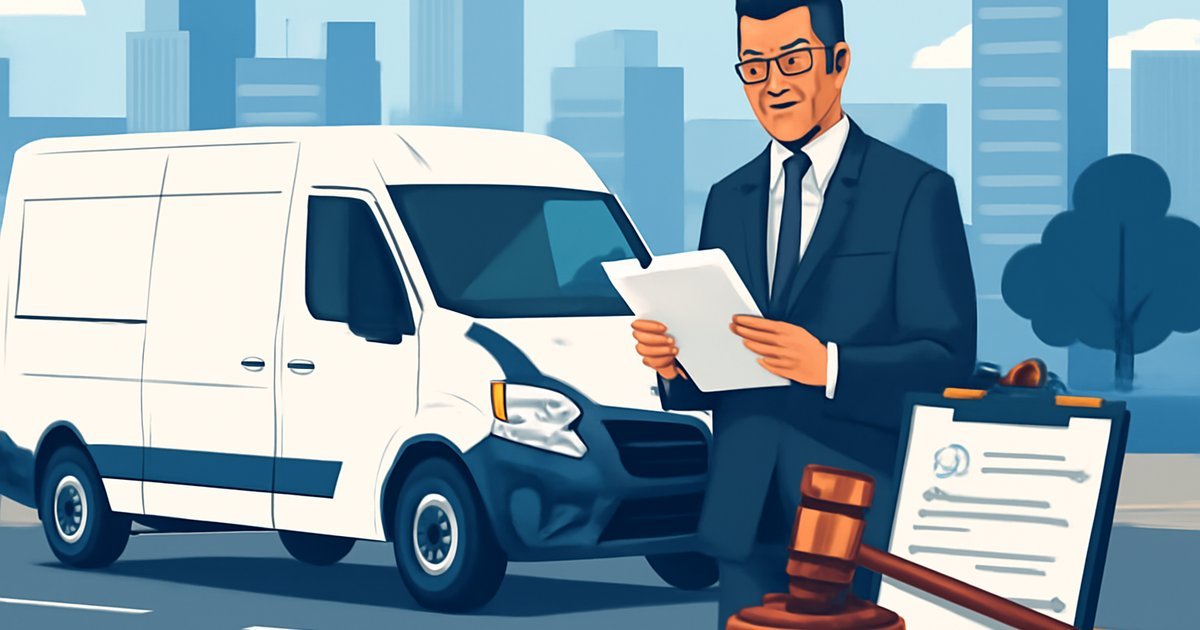
When an Uninsured Driver Crashes Into Your Business Vehicle
Imagine your delivery driver is stopped at a red light when an uninsured motorist rear-ends the company van. The at-fault driver has no insurance, no significant assets, and no way to pay for damages. Your driver is injured, the van is totaled, and your business grinds to a halt — all because someone else broke the law.
This scenario is far more common than most business owners realize. According to the Insurance Research Council, roughly 1 in 8 drivers on U.S. roads is uninsured — and in some states like Mississippi and Michigan, that rate climbs above 20%. When your business vehicle is involved in one of these accidents, the financial fallout can be devastating without the right legal and insurance strategy in place.
In this guide, you’ll learn exactly what happens when an uninsured driver hits your business vehicle, what a car accident lawyer can do to protect your company, how to pursue every legal avenue available, and what insurance coverage you should already have in place. Whether you operate a fleet of five or fifty vehicles, this information could save your business thousands of dollars — and potentially keep you out of bankruptcy court.
How Uninsured Driver Accidents Affect Small Businesses
When an individual gets hit by an uninsured driver, it’s stressful. When a business vehicle is hit, the stakes multiply immediately. You’re dealing with vehicle repair or replacement costs, lost business income during downtime, potential employee medical bills, workers’ compensation claims, and possible client contract breaches caused by service interruptions.
The Federal Motor Carrier Safety Administration (FMCSA) reports that commercial vehicle accidents cost U.S. businesses an average of $148,000 per crash — and that number can exceed $500,000 when serious injuries are involved. Even a minor fender-bender involving your company vehicle can generate repair bills of $8,000 to $15,000 for modern commercial vans or trucks.
Here’s what makes uninsured driver accidents uniquely damaging for businesses:
- No direct recovery from the at-fault party: If the driver has no insurance and no assets, suing them often yields nothing — a judgment you can’t collect is just a piece of paper.
- Workers’ comp complexity: If your employee is injured, workers’ comp kicks in, but it doesn’t cover vehicle damage or lost business income.
- Business interruption: A company vehicle out of commission means delayed deliveries, missed client appointments, and potential contract penalties.
- Subrogation battles: Even if your insurer pays, they may pursue the at-fault driver — a process that takes months and may ultimately recover nothing.
A car accident lawyer who specializes in commercial vehicle claims understands all of these moving parts and can build a strategy that maximizes your business’s financial recovery from day one.
What a Car Accident Lawyer Does After an Uninsured Driver Accident
Many business owners assume that if the at-fault driver has no insurance, there’s nothing a lawyer can do. That’s one of the most expensive misconceptions in business liability law. An experienced car accident attorney will pursue every available source of compensation — many of which business owners never consider on their own.
1. Identifying All Potentially Liable Parties
The uninsured driver may not be the only party responsible. A skilled attorney will investigate whether:
- A third party (employer, vehicle owner, or leasing company) bears liability for the at-fault driver’s actions
- A government entity is responsible for road hazards or poor signage that contributed to the crash
- A vehicle manufacturer bears product liability for defective parts that worsened the accident
- Another insured driver shares partial fault under your state’s comparative negligence laws
2. Filing Uninsured Motorist (UM) Claims Correctly
Uninsured motorist coverage — which you should have on every commercial policy — is your primary financial lifeline in these cases. However, UM claims have strict filing deadlines and documentation requirements. A car accident lawyer ensures your claim is filed correctly, documented thoroughly, and not undervalued by your own insurer’s adjusters.
3. Handling Your Insurer’s Subrogation Rights
If your insurer pays your claim, they gain the right to sue the at-fault driver on your behalf. Your attorney can coordinate with your insurer’s subrogation team to ensure this process doesn’t interfere with your own recovery — and in some cases, can recover additional funds beyond what your policy alone covers.
4. Negotiating Business Loss Documentation
Lost revenue, replacement vehicle costs, client contract penalties, and employee overtime costs are all potentially recoverable damages. Your attorney knows how to document and present these figures in a format that insurers and courts recognize as legitimate business losses.
For a deeper look at how attorneys protect businesses in commercial vehicle crashes, see our guide on Vendor Car Accidents: How a Lawyer Protects Your Business.
Insurance Coverage Your Business Must Have Before an Accident Happens
The single most important thing you can do to protect your business from uninsured driver accidents is to have the right insurance in place before the crash occurs. According to the CFPB, many small business owners discover fatal gaps in their commercial auto coverage only after a claim is filed — by which point it’s too late.
Uninsured/Underinsured Motorist (UM/UIM) Coverage
This is your most critical protection. UM/UIM coverage pays for damages your business suffers when the at-fault driver has no insurance or insufficient insurance. For commercial policies, coverage limits typically range from $100,000 to $1 million per occurrence. In most states, insurers are required to offer UM/UIM coverage, though businesses can sometimes waive it in writing — a decision that can be catastrophic.
Action step: Review your commercial auto policy today. Confirm UM/UIM is included, understand your limits, and consider whether your coverage matches your actual vehicle replacement costs and revenue exposure.
Commercial Auto Insurance with Collision Coverage
Collision coverage pays for your vehicle damage regardless of who is at fault. Without it, an uninsured driver accident leaves you paying out of pocket for vehicle repairs or replacement. Premiums vary widely by state, vehicle type, and driving history, but Bankrate data suggests commercial vehicle collision coverage averages between $800 and $2,400 per vehicle annually for small businesses.
Business Interruption Insurance
If your vehicle is out of commission for weeks, business interruption insurance covers lost income and ongoing expenses during the downtime period. This is separate from your commercial auto policy and often underutilized by small business owners. See our full breakdown of Commercial Auto Insurance: A Complete Guide for Small Businesses for coverage details.
Commercial Umbrella Insurance
For high-value fleets or businesses with significant revenue exposure, a commercial umbrella policy provides an additional layer of liability and loss protection beyond your base policy limits. Coverage typically starts at $1 million and is generally more affordable than business owners expect — often $800 to $1,500 annually for the first $1 million in additional coverage.
Step-by-Step: What to Do Immediately After an Uninsured Driver Hits Your Vehicle
The actions taken in the first 48 hours after a commercial vehicle accident significantly impact your legal and financial recovery. Here’s the exact process your business should follow:
- Secure the scene and ensure employee safety: Your driver should call 911 immediately. Medical documentation of any injuries begins here — and workers’ compensation claims require documented medical treatment from day one.
- Get a police report: A police report is essential for both your insurance claim and any legal action. The report will document the at-fault driver’s lack of insurance — a critical piece of your UM claim.
- Collect all available information: Photograph the scene, all vehicles, license plates, road conditions, and any visible injuries. Get witness names and contact information.
- Notify your insurer within 24 hours: Commercial auto policies typically have strict notification requirements. Delayed reporting can complicate or even void your claim.
- Document all business losses immediately: Start tracking lost revenue, replacement vehicle rental costs, employee overtime, and any client penalties or missed contracts resulting from the accident.
- Consult a car accident lawyer before giving recorded statements: Insurance adjusters — even from your own insurer — may ask for recorded statements that could limit your recovery. An attorney can guide you on what to say and what to protect.
- Preserve all evidence: Do not authorize vehicle repairs until your attorney or insurer has documented the damage. Preserve dashcam footage, GPS records, and vehicle maintenance logs.
Costs, Fees, and Realistic Recovery Timelines
Understanding the financial mechanics of pursuing an uninsured driver claim helps you set realistic expectations and plan your business cash flow accordingly.
Attorney Fees
Most car accident lawyers who handle commercial vehicle claims work on a contingency fee basis — meaning they collect a percentage of your recovery rather than charging upfront. Contingency fees typically range from 25% to 40% of the total settlement, depending on case complexity and whether litigation is required. For a $150,000 recovery, that means $37,500 to $60,000 in attorney fees.
While that sounds significant, consider that studies from the Insurance Research Council consistently show that claimants represented by attorneys recover settlements 3.5 times higher on average than unrepresented claimants — even after attorney fees are deducted.
Timeline Expectations
- UM insurance claims: Typically resolved in 3 to 9 months for straightforward commercial claims
- Litigation against the at-fault driver: 12 to 36 months, with potential collection difficulties even after judgment
- Workers’ comp claims for injured employees: Ongoing, parallel process managed separately
Tax Implications
Business loss recoveries are generally taxable income. However, recoveries for property damage (vehicle replacement) may be treated differently than recoveries for lost profits. Consult a CPA to understand how settlement proceeds impact your business tax liability in the year received.
Common Mistakes Business Owners Make After Uninsured Driver Accidents
These are the errors that consistently cost business owners thousands of dollars — sometimes the entire value of their claim.
Mistake 1: Assuming There’s Nothing to Recover
Many business owners hear "uninsured driver" and give up on recovery entirely. In reality, your UM/UIM coverage, collision coverage, business interruption policy, and potential third-party liability claims may provide full or near-full compensation. Never assume before consulting an attorney.
Mistake 2: Giving a Recorded Statement Without Legal Counsel
Your own insurer’s adjuster may request a recorded statement shortly after the accident. While this seems routine, statements made without legal guidance can inadvertently limit your recovery or be used to dispute aspects of your claim. Always speak with a car accident lawyer first.
Mistake 3: Failing to Document Business Losses Properly
Lost revenue claims require contemporaneous documentation — meaning records created at the time of the loss, not reconstructed weeks later. Without proper bookkeeping records, client contracts, and revenue projections, business loss claims are routinely denied or undervalued by insurers.
Mistake 4: Settling Too Quickly
Insurers often present initial settlement offers within days of a claim. These offers are almost always lower than what a fully documented claim is worth. Accepting a quick settlement typically waives your right to future claims related to the same accident — including injury complications that emerge weeks later.
Mistake 5: Not Having UM/UIM Coverage
Some business owners waive uninsured motorist coverage to reduce premiums. According to the Insurance Information Institute, this is one of the most financially dangerous decisions a commercial vehicle operator can make — and it’s almost impossible to undo after an accident occurs.
Alternatives and Complementary Legal Strategies to Consider
Depending on your situation, a car accident lawyer may recommend one or more of these complementary approaches alongside your primary insurance claim.
Civil Judgment Against the At-Fault Driver
Pros: Establishes legal liability; judgment may be collectible if driver’s financial situation improves; can be renewed in most states.
Cons: Expensive and time-consuming to litigate; collection from judgment-proof individuals is often impossible in the short term.
Best for: Situations where the at-fault driver owns property, has a regular income, or may inherit assets in the near future.
Third-Party Employer Liability Claims
Pros: If the uninsured driver was operating in the scope of employment, their employer may bear full vicarious liability — and likely has insurance.
Cons: Requires proving employment and scope of duty, which can be contested.
Best for: Accidents involving delivery drivers, rideshare contractors, or workers who appear to be on the job during the crash.
State Uninsured Motorist Funds
Several states operate uninsured motorist guarantee funds or similar programs that provide limited compensation to accident victims when the at-fault driver has no insurance. Coverage limits are typically low ($10,000 to $30,000), but these funds can supplement other recovery sources. Your attorney will know whether your state offers this option.
For related legal protection strategies, see our guide on Customer Car Accident on Business Property: Legal Guide.
Frequently Asked Questions
Can my business sue an uninsured driver who caused the accident?
Yes, you can file a civil lawsuit against an uninsured at-fault driver. However, winning a judgment and actually collecting money are two different things. If the driver has no significant assets or income, collecting on the judgment may be difficult or impossible in the near term. Your attorney will assess whether litigation is worth pursuing based on the driver’s financial profile.
Does workers’ compensation cover my employee’s injuries from the accident?
Generally speaking, yes — workers’ compensation covers medical expenses and a portion of lost wages for employees injured on the job, including during work-related driving. However, workers’ comp does not cover vehicle damage, business income losses, or other commercial damages. These require separate insurance claims or legal action.
How long does my business have to file an uninsured motorist claim?
UM claim deadlines vary by state and by your specific policy terms. In most states, the statute of limitations for commercial auto claims ranges from 2 to 4 years from the date of the accident. However, your policy may require you to notify your insurer within 30 to 90 days of the accident. Missing these internal deadlines can void your coverage entirely.
What if the at-fault driver was driving someone else’s uninsured vehicle?
In most states, auto insurance follows the vehicle, not the driver. If the vehicle itself is uninsured, you would still file a UM claim with your own insurer. However, the vehicle’s owner may bear independent liability — especially if they knew the driver was unlicensed or uninsured and loaned the vehicle anyway. A car accident lawyer will investigate ownership and lending circumstances carefully.
Will filing a UM claim raise my commercial auto insurance premiums?
In most cases, filing a UM claim when you are not at fault should not directly increase your premiums. However, some insurers do consider claim history when renewing policies, regardless of fault. Discuss this with your insurance broker before filing, and consider whether small claims are worth the potential long-term premium impact.
Key Takeaways: Protecting Your Business Before and After an Uninsured Driver Accident
An uninsured driver accident involving your business vehicle is a financial emergency — but it doesn’t have to be a catastrophe. The businesses that recover quickly and completely are those that had the right insurance in place, documented their losses carefully, and retained an experienced car accident lawyer before making any decisions.
Start by auditing your commercial auto policy this week. Confirm that UM/UIM coverage is active and adequately funded for your actual vehicle values and revenue exposure. If you’ve already experienced an accident, don’t wait — consult a car accident attorney before accepting any settlement offer or giving recorded statements to adjusters.
The legal and financial landscape after a commercial vehicle accident is complicated. Having an expert in your corner — one who specializes in business vehicle claims — is not a luxury. For businesses operating vehicles regularly, it’s a necessity. Consider also reviewing your Commercial Auto Insurance coverage to ensure your business is fully protected going forward.
This article is for educational purposes only and does not constitute financial, tax, or investment advice. Always consult a licensed financial advisor, CPA, or attorney before making financial decisions.
Leave a Reply