Premises liability claims cost U.S. businesses billions of dollars every year — and one unresolved lawsuit can permanently close a small company’s doors.
According to the National Floor Safety Institute, slip and fall accidents alone account for over 8 million emergency room visits annually in the United States. For small business owners, that statistic isn’t just a health concern — it’s a direct financial threat. If someone gets hurt on your property, your business could be held legally responsible, regardless of whether you feel the accident was your fault.
Premises liability law governs when and how a property owner or occupier can be held financially accountable for injuries that occur on their premises. Whether you run a retail store, a restaurant, a warehouse, or an office, understanding premises liability is one of the most critical steps you can take to protect your company.
In this guide, you’ll learn exactly what premises liability means for business owners, what a personal injury lawyer looks for when evaluating a claim against a business, how to reduce your legal exposure, and what to do if your business is named in a lawsuit.
What Is Premises Liability and How Does It Work?
Premises liability is a legal concept that holds property owners and occupiers responsible for accidents and injuries that occur on their property due to negligence. In a business context, this means you have a legal duty of care toward anyone who enters your premises — customers, clients, vendors, delivery personnel, and even, in some situations, trespassers.
The duty of care you owe depends on the visitor’s legal classification under U.S. law:
- Invitees — People you invite onto your property for business purposes (customers, clients). You owe them the highest duty of care: actively inspecting the premises and fixing or warning about known hazards.
- Licensees — Social guests or people with permission to be there but not for business. You must warn them of known dangers.
- Trespassers — Generally owed the least duty, though rules vary by state, especially when children are involved (the "attractive nuisance" doctrine).
For a personal injury lawyer to build a successful claim against your business, they typically need to prove four elements: (1) you owed the injured party a duty of care, (2) you breached that duty by failing to maintain safe conditions, (3) the breach directly caused the injury, and (4) the injured party suffered actual damages — medical bills, lost wages, pain and suffering.
The Centers for Disease Control and Prevention (CDC) reports that the total medical costs for falls in the U.S. exceed $50 billion annually, giving you a sense of the scale of litigation your business could face from a single incident.
Common Premises Liability Hazards That Lead to Business Lawsuits
Personal injury lawyers who specialize in premises liability know exactly what to look for when they walk into a business after a client gets hurt. Understanding the most common hazard categories can help you assess your own risk exposure before a lawsuit is filed.
The most frequently cited hazards in business premises liability claims include:
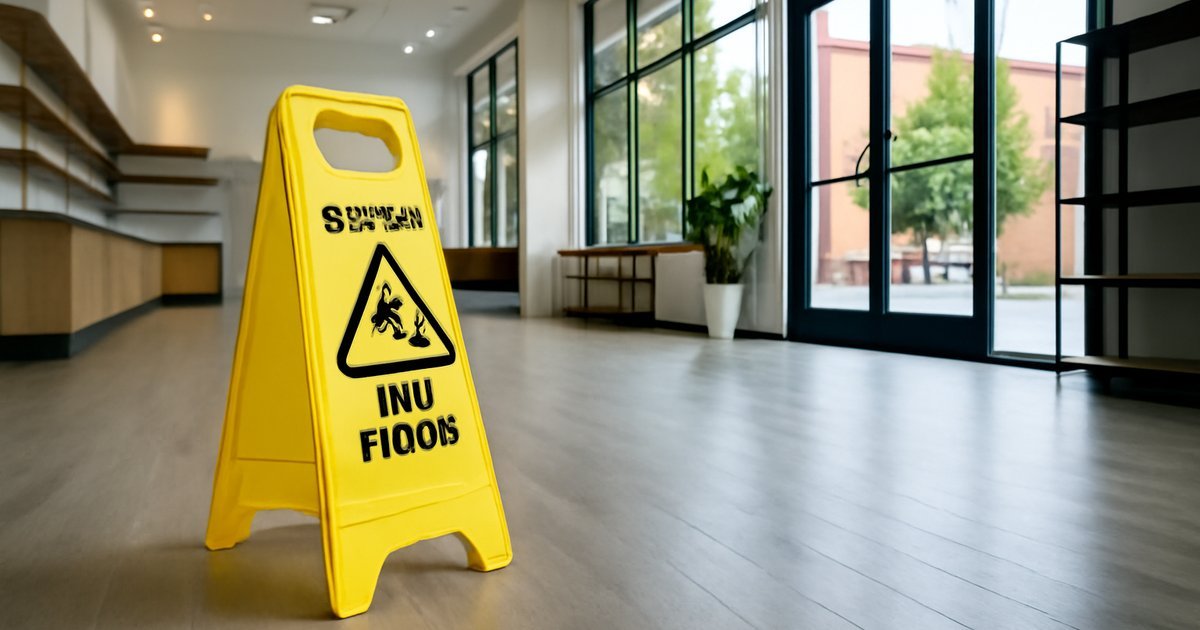
- Wet or slippery floors — Freshly mopped floors without warning signs, leaking refrigeration units, or rain-soaked entryways are classic triggers. Courts consistently find businesses liable when reasonable signage or cleanup was absent.
- Inadequate lighting — Dark parking lots, poorly lit stairwells, and dim hallways create dangerous conditions. OSHA recommends minimum lighting levels for commercial spaces, and falling below those standards can be used as evidence of negligence.
- Uneven or damaged flooring — Cracked sidewalks outside your entrance, damaged floor tiles, or loose carpeting are all actionable hazards if you knew — or reasonably should have known — about them.
- Faulty staircases and railings — Missing handrails, broken steps, or non-code-compliant staircases can generate significant liability, especially in older buildings.
- Inadequate security — If an assault or robbery occurs on your property and you failed to provide adequate security measures, you may face a "negligent security" claim, a subcategory of premises liability.
- Falling objects — Improperly stacked merchandise in a retail setting or unsecured equipment in a warehouse can fall and seriously injure customers or employees.
The National Safety Council estimates that the average workers’ compensation and medical cost per medically consulted injury exceeds $42,000 — and third-party premises liability claims can run significantly higher when pain and suffering damages are included.
How a Personal Injury Lawyer Builds a Case Against Your Business
If your business is served with a premises liability lawsuit, understanding how the opposing personal injury lawyer will build their case is the single most important thing you can do to prepare your defense.
Here is the typical approach a plaintiff’s personal injury attorney will take:
- Investigate the scene — They’ll visit the location, document the hazard (if it still exists), photograph conditions, and measure distances, lighting levels, and floor materials.
- Gather maintenance and inspection records — They’ll submit discovery requests for your cleaning logs, inspection checklists, maintenance work orders, and employee training records. Gaps or missing records almost always favor the plaintiff.
- Collect witness statements — Employees who were present, other customers, or anyone who had previously reported the hazard are all potential witnesses. A prior complaint that was ignored is extremely damaging evidence.
- Review surveillance footage — Your own security cameras can become evidence against you. Personal injury lawyers routinely issue preservation letters demanding you retain all video footage immediately after an incident.
- Hire expert witnesses — In complex cases, they may retain a safety expert, a medical professional to testify on injury severity, or an economist to calculate long-term lost wages.
- Calculate total damages — Medical bills, future medical costs, lost income, pain and suffering, and potentially punitive damages if gross negligence is proven.
According to the Insurance Information Institute (III), the average general liability claim for bodily injury in the U.S. costs businesses approximately $20,000 to $75,000 — and claims that go to trial can reach well into the six or seven figures.
If your business faces a premises liability lawsuit, you should immediately contact your commercial general liability insurance carrier and retain your own attorney. For more on how commercial liability coverage works, see our guide on Commercial General Liability Insurance: A Complete Guide.
Steps to Reduce Your Premises Liability Exposure
The best time to consult a personal injury lawyer about your business is before a lawsuit is filed — not after. Proactive risk management is your most powerful legal and financial defense. Here are the critical steps every business owner should take:
- Conduct regular property inspections — Create a written inspection schedule and document every inspection with a dated log. Courts give significant weight to documented proof that you actively maintained your property. At minimum, inspect daily for any customer-facing business.
- Fix hazards immediately — or warn about them — If you identify a hazard you can’t fix right away (a leaky pipe, a damaged floor tile), you must warn visitors clearly with visible signage. "Warning: Wet Floor" signs exist for a reason — use them consistently and document when they were deployed.
- Maintain a written maintenance log — Every repair, inspection, and maintenance task should be documented in writing with dates, employee names, and descriptions of work done. This paper trail is your primary defense in a lawsuit.
- Train employees on hazard reporting — Every employee should know how to identify and immediately report potential hazards. Create a simple, written protocol and conduct regular training sessions. Document that training occurred.
- Review your insurance coverage annually — Make sure your commercial general liability policy has adequate coverage limits for your business type and foot traffic. Many small businesses are dangerously underinsured. A business with high customer volume should typically carry at least $1 million per occurrence in CGL coverage.
- Ensure ADA compliance — The Americans with Disabilities Act requires businesses open to the public to meet specific accessibility standards. Non-compliance can create a separate layer of legal liability on top of a premises injury claim.
- Consult a business attorney for a liability audit — Have a qualified attorney walk through your premises and identify legal vulnerabilities before they become lawsuits. The cost of a few hours of legal consultation is a fraction of a single premises liability settlement.
Costs, Fees, and Financial Risks of Premises Liability Claims
Understanding the true financial exposure of a premises liability claim is sobering — and essential for every business owner’s risk planning.
Here’s a realistic breakdown of what these claims can cost:
- Medical expenses — Even a relatively minor injury like a broken wrist can generate $15,000 to $30,000 in immediate medical bills. Serious injuries — spinal damage, traumatic brain injury — can result in lifetime care costs exceeding $1 million.
- Lost wages — If the injured party misses work, you may be liable for their lost income during recovery, and in severe cases, for reduced future earning capacity.
- Pain and suffering damages — These non-economic damages are often the largest component of a premises liability award and can multiply the total payout by three to five times the actual medical costs, depending on the jurisdiction.
- Legal defense costs — Even if you win, defending a premises liability lawsuit typically costs $25,000 to $75,000 in attorney fees alone. Your CGL insurance usually covers defense costs, but only up to your policy limits.
- Punitive damages — If a court finds that your negligence was egregious — for example, if you had multiple prior complaints about the same hazard and did nothing — punitive damages can be awarded on top of compensatory damages, sometimes multiplying the verdict significantly.
- Reputational costs — Public lawsuits, especially in small communities or niche industries, can damage customer trust and your business’s ability to attract new clients.
The U.S. Chamber Institute for Legal Reform estimates that tort costs burden U.S. businesses with over $343 billion annually. Small businesses — which often lack the legal infrastructure of large corporations — carry a disproportionate share of that burden.
Common Mistakes Business Owners Make That Worsen Premises Liability Claims
When a personal injury lawyer evaluates a premises liability case against a business, they’re often just as interested in what the business owner did after the incident as they are in what caused it. Avoid these critical mistakes:
Mistake #1: Failing to document the incident immediately. Many business owners panic after an accident and fail to create a thorough incident report. Every workplace injury or customer accident should be documented in writing within hours — not days — of the event. Note the exact location, time, conditions (lighting, floor state, weather), witnesses present, and the injured party’s own description of what happened. This contemporaneous record is invaluable in your defense.
Mistake #2: Admitting fault at the scene. It’s natural to feel empathy when someone gets hurt on your property. But statements like "I’m so sorry, we knew that floor was slippery" are admissions of negligence that a personal injury lawyer will use against you in litigation. Express care and concern without making any statements about responsibility. Instruct your employees to do the same.
Mistake #3: Erasing or overwriting surveillance footage. Many businesses operate on automatic video loops that overwrite footage after 30 to 90 days. If an incident occurs, immediately save and preserve all relevant surveillance footage. Destroying evidence — even accidentally — can result in a court issuing a "spoliation" instruction to the jury, meaning they can assume the missing footage was damaging to you.
Mistake #4: Delaying notification to your insurer. Most commercial general liability policies require you to report claims "promptly" or within a specific time window. Failing to notify your insurer quickly enough can give them grounds to deny coverage — leaving you personally exposed to the full cost of a judgment.
Mistake #5: Assuming a small incident won’t become a lawsuit. Many business owners see a minor fall with no apparent injury and assume nothing will come of it. In reality, injuries like herniated discs or concussions may not produce obvious symptoms for days or weeks. Always treat every incident as if it could become litigation.
For additional context on how your business structure can affect your personal liability exposure in these situations, review our article on Business Impact: When a Personal Injury Lawyer Can Help Your Enterprise.
Alternatives to Litigation: Resolving Premises Liability Claims
Not every premises liability claim has to result in a lengthy, expensive trial. In fact, the majority of premises liability cases in the U.S. are resolved before they ever reach a courtroom. Here are the primary resolution pathways:
1. Insurance Settlement (Most Common)
Your commercial general liability insurer will typically handle negotiations with the plaintiff’s attorney and attempt to settle the claim for a reasonable amount. Most premises liability claims — especially those with clear-cut liability — settle this way. The advantage: it’s faster, cheaper, and avoids the uncertainty of a jury verdict. The disadvantage: a settlement may still affect your future insurance premiums.
2. Mediation
In mediation, both parties agree to meet with a neutral third party (the mediator) who helps facilitate a negotiated settlement. Mediation is non-binding, meaning either side can walk away if no agreement is reached. It’s significantly cheaper than trial and can be completed in days rather than years. Many courts now require mediation before allowing cases to proceed to trial.
3. Arbitration
Some commercial leases or business contracts include arbitration clauses that require disputes to be resolved through a private arbitrator rather than a court. Arbitration is binding, generally faster than a trial, and less expensive — but you give up the right to appeal. Review your business contracts to understand whether arbitration clauses apply to your situation.
If your business also faces claims related to a vehicle incident on your property or involving your employees, our guide on Client Car Accident Lawsuits: Business Liability Guide provides additional relevant legal context.
Frequently Asked Questions
Can I be personally sued for a premises liability claim against my business?
It depends on your business structure. If you operate as a sole proprietor, your personal assets are directly exposed. If your business is structured as an LLC or corporation, you generally have personal liability protection — as long as you’ve maintained proper separation between your business and personal finances. This is one of the strongest reasons to choose the right business entity from the start.
What should I do immediately after a customer is injured on my property?
Call for medical assistance if needed. Document the scene thoroughly with photos and written notes. Collect witness contact information. Complete a formal incident report. Preserve any surveillance footage. Notify your commercial general liability insurer promptly. Do not admit fault or make any statements about liability.
Does my homeowner’s insurance cover my home-based business for premises liability?
Generally speaking, no. Standard homeowner’s insurance policies typically exclude commercial activities. If you operate a business from your home — including seeing clients or customers — you likely need a separate business owner’s policy (BOP) or a commercial general liability endorsement. Assuming your homeowner’s policy covers business activities is a dangerous and costly mistake.
How long does a premises liability lawsuit typically take to resolve?
Cases that settle before trial often resolve within 6 to 18 months of the incident. Cases that proceed to trial can take 2 to 4 years or longer, depending on court backlogs in your jurisdiction. Complex cases involving severe injuries or disputed liability typically take the longest to resolve.
What coverage limits should my commercial general liability policy have?
Most financial advisors and attorneys recommend at minimum $1 million per occurrence and $2 million aggregate for small businesses. High-traffic retail businesses, restaurants, or businesses with elevated hazard profiles should consider higher limits or an umbrella policy. Discuss your specific situation with a licensed commercial insurance broker.
Conclusion: Protect Your Business Before a Lawsuit Forces You To
Premises liability is not a hypothetical risk — it’s a daily financial reality for every business that opens its doors to the public. A single slip and fall, a poorly lit parking lot, or a cracked sidewalk can trigger a lawsuit that threatens years of hard work and accumulated business value.
The good news is that most premises liability exposure is manageable with consistent documentation, proactive maintenance, proper employee training, and the right insurance coverage. These aren’t complicated steps — but they require intentional, ongoing effort.
Your most important next step: schedule a premises liability walkthrough with a qualified business attorney and review your commercial general liability coverage limits with your insurance broker. Don’t wait for an accident to make these conversations urgent.
Generally speaking, the businesses that weather premises liability claims best are those that treated safety and documentation as ongoing business priorities — not afterthoughts.
This article is for educational purposes only and does not constitute financial, tax, or legal advice. Always consult a licensed attorney, CPA, or financial advisor before making decisions about your business’s legal or financial strategy.