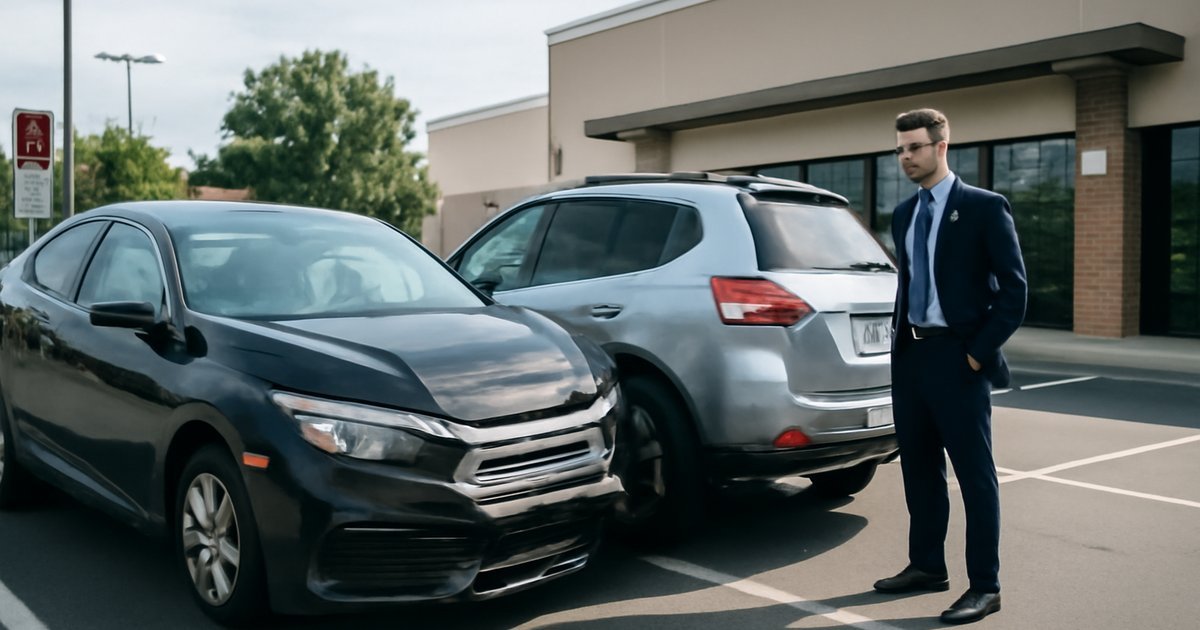
One lawsuit from a parking lot fender-bender can cost a small business owner $50,000 or more — even when you think it wasn’t your fault.
Introduction
According to the National Safety Council, parking lot accidents account for roughly 20% of all vehicle crashes in the United States — and many of them happen on privately owned business property. If a customer is injured in your parking lot, struck by another vehicle near your entrance, or involved in a collision caused by poor lighting or unclear signage on your premises, your business could be held legally responsible.
Most small business owners assume their general liability insurance covers everything. That assumption, in many cases, turns out to be dangerously incomplete.
This guide explains exactly what happens when a customer is in a car accident on your business property, how premises liability and negligence law works in this context, what a car accident lawyer can do to defend your business, and what proactive steps you can take right now to reduce your exposure.
Whether you own a retail shop, a restaurant, a medical office, or a warehouse, this is essential reading.
This article is for educational purposes only and does not constitute financial, tax, or investment advice. Always consult a licensed financial advisor, CPA, or attorney before making financial decisions.
What Is Business Premises Liability for Car Accidents?
Premises liability is the legal principle that property owners — including businesses — have a duty of care to keep their property reasonably safe for visitors. When that duty is breached and someone is injured as a result, the property owner can be held liable for damages.
In the context of a car accident on your business property, this means that if a customer is injured in your parking lot, driveway, or access road, and the accident was caused — even partially — by conditions you controlled, you may owe them compensation.
According to the Insurance Information Institute, slip-and-fall and premises liability claims are among the most common lawsuits filed against small businesses in the United States. Vehicle-related incidents on business property fall under the same legal umbrella.
Premises liability applies to you as a business owner even if you don’t own the building — if you lease commercial space and are responsible for maintaining the parking area under your lease agreement, you can still be held liable.
The key legal elements a plaintiff must typically prove are:
- You owed them a duty of care as a visitor or customer
- You breached that duty through negligence or inaction
- That breach directly caused their injury or vehicle damage
- They suffered measurable damages as a result
Understanding these elements is step one in building a solid legal defense — and knowing when to call a car accident lawyer.
Common Scenarios That Trigger Business Liability
The National Floor Safety Institute estimates that falls and vehicle incidents on commercial property generate billions in liability claims annually. But not all of these incidents are immediately obvious as "your fault." Here are the most common scenarios where your business could face legal exposure:
Poor Parking Lot Conditions
Potholes, uneven pavement, faded lane markings, missing speed bumps, or inadequate lighting can cause a driver to lose control, miss a stop sign, or collide with another vehicle. If you knew about these conditions and failed to repair them, that is textbook negligence in most US jurisdictions.
Inadequate Signage or Traffic Flow Design
Parking lots with confusing one-way lanes, unmarked pedestrian crossings, or obstructed sight lines are common sources of liability. If your parking lot design creates a dangerous condition, courts have held businesses responsible even when the actual collision was between two customers.
Insufficient Lighting
Poorly lit parking areas increase accident risk after dark. In many states, maintaining adequate lighting on business property is considered a basic duty of care. A customer injured in a low-light collision can argue your negligence created the conditions for the crash.
Snow and Ice Removal Failures
In northern states, failing to clear ice or snow from your parking lot within a reasonable time after a storm has resulted in successful lawsuits against businesses. Generally speaking, most states give businesses a window of 24 to 48 hours to address hazardous conditions — but local ordinances vary widely.
Third-Party Vehicle Incidents
Even if another customer’s vehicle hits your customer, your business could be drawn into the lawsuit if your property conditions contributed to the accident. Plaintiffs’ attorneys routinely name all potentially liable parties — including the property owner — to maximize settlement opportunities.
How a Car Accident Lawyer Defends Your Business
When a customer files a lawsuit or sends a demand letter claiming your business is responsible for their car accident injuries, the stakes are immediate and significant. Medical bills, vehicle repair costs, lost wages, and pain and suffering damages can easily push a claim into the six-figure range.
A car accident lawyer with business premises liability experience plays a critical role in your defense. Here is what that typically looks like:
- Case evaluation: The attorney reviews the facts, the property conditions at the time of the accident, your insurance coverage, and the strength of the plaintiff’s claims to give you an honest assessment of your exposure.
- Evidence preservation: This includes obtaining surveillance footage, accident reports, maintenance logs, weather data, and witness statements before they are lost or destroyed.
- Insurance coordination: Your lawyer works directly with your commercial general liability insurer to ensure the claim is properly submitted and that your insurer is defending the case aggressively on your behalf.
- Negligence analysis: A skilled attorney will scrutinize whether the plaintiff shares comparative fault. In most US states, if the injured party was also negligent — for example, speeding through your lot — their damages can be reduced proportionally.
- Settlement negotiation: The majority of business liability cases settle before trial. Your attorney negotiates to minimize the payout and protect your business’s financial health.
- Trial defense: If the case goes to court, your lawyer presents your defense, challenges the plaintiff’s evidence, and works to limit or eliminate your liability.
For more context on how legal representation works when your business is involved in vehicle-related incidents, see our guide on Company Vehicle Accident: What Business Owners Must Know.
Costs, Insurance Coverage, and Financial Risks
The financial exposure from a customer car accident on your property can be severe. Here is what you need to understand before assuming you are protected:
What a Lawsuit Can Cost
According to Insureon, the average general liability claim for a small business runs between $30,000 and $75,000. Cases involving serious injuries — broken bones, traumatic brain injuries, or long-term disability — can easily exceed $500,000. If a fatality occurs on your property, damages can run into the millions.
Commercial General Liability (CGL) Insurance
Most small businesses carry a Commercial General Liability policy, which generally covers bodily injury and property damage claims arising from your business premises. A standard CGL policy typically includes $1 million per occurrence and $2 million aggregate limits — but policy language varies significantly.
Critical caveat: CGL policies often exclude coverage for vehicles operated on your premises. If the accident involves an employee driving a company vehicle, or if your policy has a vehicle exclusion clause, you may need separate commercial auto coverage to be protected. Always review your policy carefully with your broker.
Umbrella Policies
If a judgment exceeds your CGL policy limits, a commercial umbrella policy provides additional coverage — typically $1 million to $5 million in extra protection. Given the cost of serious injury lawsuits, many business attorneys recommend carrying at least $2 million in umbrella coverage.
Legal Defense Costs
Even if you ultimately win the case, defending a lawsuit is expensive. Attorney fees, expert witness costs, and court filing fees can total $20,000 to $50,000 for a case that goes through discovery and trial. In most cases, your CGL insurer covers these costs — but only up to your policy limits and only if the claim falls within covered territory.
For a broader look at how liability insurance protects your business operations, see our guide on Construction Site Accident Lawsuits: What Business Owners Must Know.
Common Mistakes Business Owners Make After a Customer Car Accident
How you respond in the hours and days after a parking lot accident can dramatically affect your legal exposure. Here are the most costly mistakes — and how to avoid them:
Mistake 1: Admitting Fault at the Scene
It feels natural to apologize when someone is hurt on your property. But statements like "I know the pavement is bad — I’ve been meaning to fix that" can be used as admissions of negligence in court. Be compassionate, call for medical help if needed, but do not make statements about fault or your property’s condition.
Mistake 2: Failing to Document the Scene
Time is your enemy when it comes to evidence. Photograph the accident scene, the vehicle damage, the surrounding property conditions, and any relevant signage immediately. Collect contact information from witnesses. If you have security cameras, preserve that footage before it is automatically overwritten — most systems loop within 24 to 72 hours.
Mistake 3: Not Notifying Your Insurer Immediately
Most commercial liability policies require prompt notification of incidents that could lead to a claim. Waiting days or weeks to report an accident — even if you think it is minor — can give your insurer grounds to deny coverage later. Report the incident to your broker the same day.
Mistake 4: Trying to Settle Directly with the Customer
Offering to pay someone’s car repair bill out of pocket to "make it go away" can backfire. That payment could be interpreted as an admission of liability, and it does not prevent the customer from later filing a larger claim for injuries that develop over time, such as whiplash or back pain. Always route these matters through your insurer and attorney.
Mistake 5: Neglecting Ongoing Property Maintenance
Many businesses lose premises liability cases not because of the accident itself, but because of documented evidence that they had prior knowledge of the dangerous condition and failed to act. Maintenance logs, repair invoices, and inspection records are your best defense. Keep them organized and up to date.
Alternatives and Complementary Protections to Consider
Beyond hiring a car accident lawyer after an incident occurs, there are proactive measures and alternative risk management tools worth considering:
1. Business Owner’s Policy (BOP)
A BOP bundles commercial general liability and commercial property insurance into a single, typically more affordable package. For small businesses, this is often the most cost-effective starting point for comprehensive coverage. However, confirm that your BOP includes premises liability for parking lots and vehicle incidents.
2. Commercial Auto Insurance
If customers regularly drive through your property — such as a drive-through restaurant, a car wash, or a gas station — standard CGL coverage may not be sufficient. Commercial auto liability policies cover vehicle-related incidents more comprehensively and may be essential depending on your business model.
3. Regular Property Risk Audits
Hiring a commercial property risk consultant to inspect your premises annually can identify hazards before they become lawsuits. Many commercial insurers offer this service as part of your policy. Proactive repair documentation also strengthens your defense if a claim is ever filed.
For more on protecting your business from premises-related claims, see our guide on Delivery Driver Accidents: Business Liability and Legal Guide.
Frequently Asked Questions
Am I automatically liable if someone has a car accident in my parking lot?
Not automatically. Liability depends on whether your negligence contributed to the accident. If the accident was entirely between two customers and your property was properly maintained and well-lit, your liability may be limited. However, you will likely still be named in any lawsuit, which is why having a car accident lawyer and strong insurance coverage is essential.
What if I lease my business space — is the landlord responsible instead?
It depends on your lease agreement. Many commercial leases assign responsibility for parking lot maintenance to the tenant. In some cases, both the landlord and the tenant share liability. Review your lease carefully with an attorney to understand exactly where your responsibility begins and ends.
Can I be sued even if the accident was entirely the customer’s fault?
Yes. Plaintiffs can name any party they believe may share responsibility. Even if you ultimately prevail, you will still need to respond to the lawsuit. This is precisely why commercial liability insurance and legal representation are non-negotiable for any business that has a customer-facing parking area.
How long does a customer have to sue my business after a parking lot accident?
Statutes of limitations vary by state. Generally speaking, most states allow two to three years for personal injury claims and up to four years for property damage claims. In California, the limit is two years; in Texas, it is also two years. Consult a local attorney for the specific rules in your state.
Does my homeowner’s insurance cover accidents at a home-based business?
In most cases, no. Standard homeowner’s policies explicitly exclude business-related liability. If you operate a business from home and customers visit your property, you likely need a separate business liability policy or a home-based business endorsement to your homeowner’s policy.
Conclusion
A customer car accident on your business property is not just an inconvenience — it is a legal and financial event that can threaten everything you have built. The good news is that with the right combination of insurance coverage, property maintenance practices, and experienced legal representation, you can manage this risk effectively.
Your immediate action steps: review your commercial general liability policy to confirm it covers parking lot incidents, implement a documented property maintenance schedule, and identify a car accident lawyer with business premises liability experience before you ever need one.
Depending on your business type and property size, you may also need commercial auto coverage or an umbrella policy. The cost of being underinsured is always greater than the cost of proper protection.
This article is for educational purposes only and does not constitute financial, tax, or investment advice. Always consult a licensed financial advisor, CPA, or attorney before making financial decisions.